Battered Skins, Late-Night Tuning: The UK Repair Bench Keeping Wedding Dhols Fighting Fit
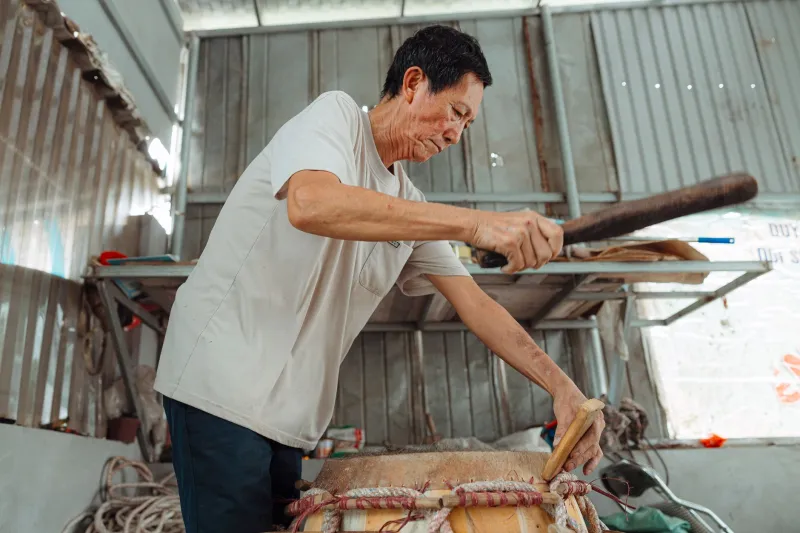
The first sign is usually the skin. A dhol comes into the workshop after a summer of marquees, community halls and road-closure baraats, and the goat skin has gone soft, patchy or plain tired. The ropes have slackened. The shell has picked up a knock. And the owner says the same thing every time: “It sounded fine at the mehndi.”
Welcome to the less glamorous side of UK Bhangra: the repair bench. Some call these places dhol hospitals, but the work is closer to instrument surgery — part craft, part diagnostics, part emergency service. In 2026, as wedding calendars fill and live bands share a shrinking pool of reliable drums, the people who can re-skin, retune and rescue a dhol are becoming quietly essential.
A season of punishment
A UK wedding dhol lives hard. It travels in the back of a van beside speaker stands and suit bags. It sits in a hot marquee before the guests arrive, then in a cold car park after the last dance. It gets played with sticks, hands, and the occasional overenthusiastic cousin. It is stored in a garage, a spare room or behind a bar, and then dragged out again for a sangeet, a baraat, a club night or a school Diwali assembly.
That kind of life takes a toll. Repairers talk about stretched skins, snapped ropes, cracked shells and tuning hardware that has seized up. The British weather does not help. A damp November storage room and a dry, heated hall can push a drum in opposite directions within weeks. By the time a dhol reaches the bench in January, it may need more than a quick tighten.
“People think a dhol is indestructible because it’s loud,” says one repairer who works out of a unit on the edge of Leicester. “But it’s wood and skin. It reacts to everything. If you leave it in a van overnight, you’ll hear it the next day.”
Why a badly tuned dhol changes the room
A dhol is not one drum but two heads working together. The treble side needs bite; the bass side needs depth. When the tuning is off, the whole beat changes shape. Too loose and the low end smears into a muddy thud. Too tight and it turns brittle, all click and no weight. Either way, the dancefloor feels it before it understands it.
For wedding families, this is not an abstract concern. The dhol is often the first sound that pulls people off their chairs. It sets the pace for the baraat, carries the entrance, lifts the sangeet and gives the DJ something to lock into later. A well-tuned dhol makes a room move. A badly tuned one makes the dancers work harder, and it makes the band sound like it is fighting the drum rather than riding it.
“You can have a great player and a terrible dhol, and the room will still feel flat,” the Leicester repairer adds. “The drum has to speak. If it doesn’t, the dholi is doing all the work with no help.”
The skills behind the fix
Re-skinning is the most visible part of the job, but it is not the whole job. A proper repair might involve cleaning and tightening the shell, replacing ropes, checking the tuning rods, repairing splits and re-seating the skin so it sits evenly. The best repairers tune by ear as much as by measurement. They know how a drum should feel under the stick, not just how it looks on the bench.
There is no big UK qualification in dhol repair. Knowledge tends to pass through bands, family connections, carpentry and years of trial and error. Some repairers are percussionists who got tired of sending drums away. Others come from woodwork or upholstery backgrounds and learned the instrument side on the job. Parts can be sourced, but matching a skin to a shell and a player’s style is still a craft.
That is why lead times matter. In a busy wedding year, a repairer cannot magic up a finished dhol overnight. Good skins need preparation. Shells need time. Tuning needs patience. Bands that leave it until two weeks before a wedding are often the ones ringing around in a panic.
What bands and families should know before the next big night
- Book the service before the season, not during it. If your dhol has done a full summer, get it looked at in the quieter months rather than the week before a wedding.
- Ask what is being replaced and why. A new skin is not always the answer. Sometimes the shell, ropes or tuning hardware need attention first.
- Keep a spare drum if you can. For bands and busy families, one backup dhol can save a whole event.
- Store it properly. Avoid damp garages, hot cars and leaning the drum against a radiator. A stable, dry space is better than a dramatic one.
- Tune on the day. Temperature and humidity change. A dhol that sounded perfect at soundcheck may need a small adjustment before the baraat.
- Learn the basics. Every dholi and every wedding family should know how to check tension, spot a failing skin and tighten a rope safely.
The quiet infrastructure of UK Bhangra
The UK scene is often measured by line-ups, releases and festival stages. But it also runs on repair benches, spare skins and people who know how to get a drum back into shape before the first guest arrives. That work is not glamorous. It rarely gets a credit. But without it, a lot of wedding dancefloors would sound a lot thinner.
A dhol is not a prop. It is the engine of the night. In 2026, with wedding season as busy as ever, the smartest thing a band or family can do is treat it like one — and find the person who knows how to keep it fighting fit.