One String, Whole Room: Why the Tumbi Is Cutting Through UK Bhangra Again
There is a moment, somewhere in the second half of a good Bhangra tune, when everything else drops away and one string does the work. No chord stack, no wall of synths — just a bright, slightly nasal twang that seems to travel over the top of the room rather than through it. That is the tumbi, and in 2026 it is quietly turning up in more UK sessions than it has for years.
Not as a nostalgia gesture, and not as a checkbox for "authenticity". Producers are using it because it works. In a crowded mix, on a wedding dancefloor, through a phone speaker in a car park in Southall, the tumbi's fundamental frequency and its sharp attack cut through where pads and plucks get buried.
The Sound That Refuses to Sit Still
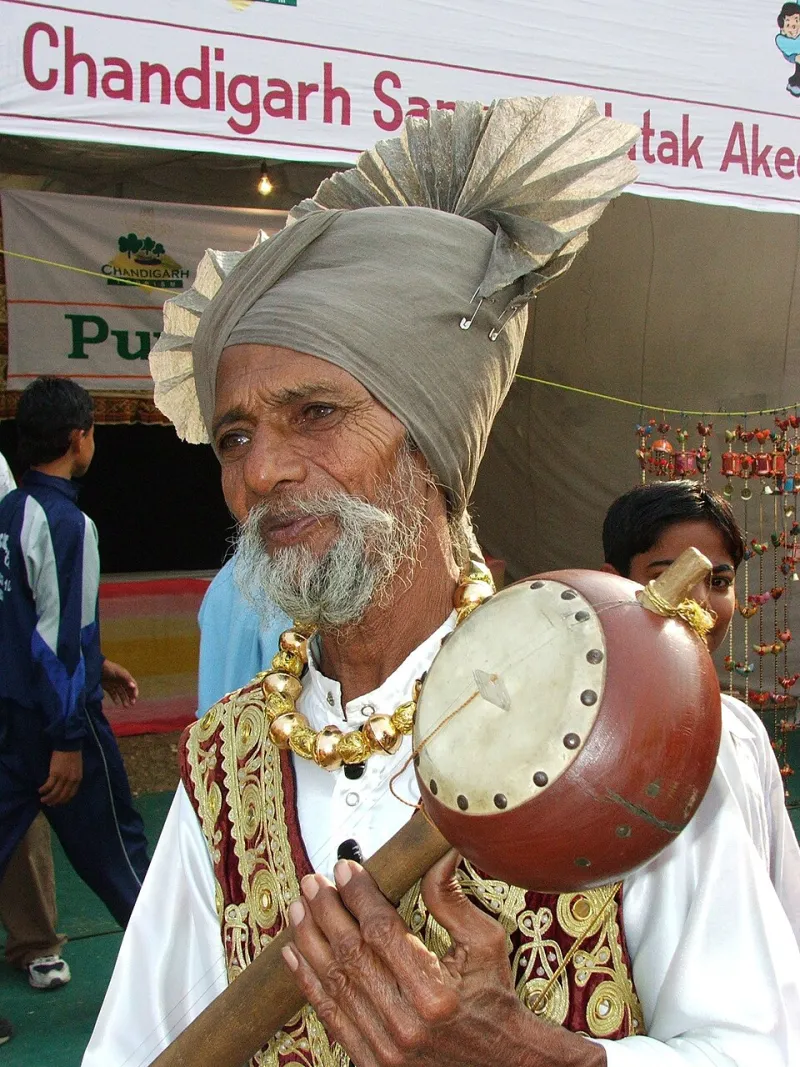
The tumbi is a one-string instrument, traditionally associated with Punjabi folk and with the kind of hook-driven songs that fill a room before anyone has decided to dance. Its body is small, its neck is long, and its tone is thin in the most useful way: it occupies a narrow slice of the frequency range and refuses to compete with the bass or the dhol.
"It is almost a percussion instrument the way I use it," says Harvinder, a producer working out of a converted garage studio in Southall. "You play a phrase once, it sits above the kick, and the dancefloor hears it as rhythm as much as melody. A synth can do the same job, but the tumbi has a rasp to it. It sounds like it has been handled."
That tactile quality matters. A lot of current UK Bhangra production is precise to the point of being airless — sidechained, quantised, mixed to within an inch of its life. The tumbi brings an unstable edge. Players fret slightly sharp, the string buzzes, the plectrum catches. In an era when a lot of sounds arrive from a sample pack, that instability reads as personality.
Why Producers Are Reaching for It Now
The return is not a single trend. It is a few things happening at once.
First, tempos. UK Bhangra has spent a while getting faster and more clipped, chasing the short, hook-first structures that suit social clips. The tumbi thrives in that environment because its phrases are short by nature. A three-note motif can do the work of a full melodic section.
Second, arrangements. Wedding sets in 2026 are being built with more space — a drop, a vocal line, a tumbi response, a bass movement. Producers are writing parts that can survive being cut down for a two-minute edit and still make sense.
Third, supply. There are more people repairing and setting up folk instruments in the UK than there were a few years ago, and a lot of them are within reach of the bedroom-studio crowd. "Ten years ago, if you wanted a tumbi that played in tune and did not fall apart, you were asking around," says Bal, who repairs stringed instruments in Bradford and has seen a steady trickle of tumbis come through the workshop. "Now people are buying them, breaking them, and bringing them in. That is a healthy sign. It means they are being played, not just looked at."
The Wedding Edit Problem
If you want to hear the tumbi's current role most clearly, listen to a wedding edit rather than a full release. Couples and their families are commissioning custom versions of songs for entrances, dholki nights and the last half hour of the reception, and the tumbi is often the part that gets pushed forward.
"The request I get most is: can you make it sound like a live band but keep the bass from the record," says Simran, a DJ and editor based in Leicester. "So I will strip out the synth lead, put a tumbi on the same melody, and leave everything else. It suddenly sounds like a different song. It sounds like it is happening in the room rather than coming out of a laptop."
That live-band illusion is part of the appeal. A tumbi part, even a programmed one, implies a player. It suggests a moment of performance. On a dancefloor where half the room has seen the same set at three different weddings, that suggestion is worth a lot.
There is a practical side too. The tumbi's narrow frequency range means it can be added to an existing mix without rebalancing everything. For DJs working on edits at short notice, that is a gift.
Blending Old and New Without the Costume
The risk, as ever, is pastiche. Drop a tumbi onto a track that has no space for it and you get a novelty record — folk instrumentation as decoration. The producers getting it right are treating the instrument as a lead voice, not a garnish.
"I do not use it on everything," says Harvinder. "If the track is already busy, the tumbi makes it busier. The trick is to take something else out. Usually the synth pluck. You swap one for the other and the whole thing breathes."
That swap is the quiet story of UK Bhangra production in 2026: not a return to the old sound, but a reallocation of space. The basslines are heavier than they were. The drums are more programmed. The vocal is still the centre. The tumbi sits in the gap between the vocal and the kick, doing the job a lead synth used to do, but with more grit.
A Short Listening List
If you want to hear the tumbi front and centre in current UK output, start here. These are not definitive, and half of them will be replaced by next month's edits, but they show the range.
- Wedding edits doing the rounds on UK DJ drives — stripped-back versions of familiar songs where the synth lead has been replaced by a tumbi line and the bass left intact. Ask your DJ; they will have a folder.
- Southall bedroom releases — short, hook-first tracks built around a single tumbi phrase and a heavy sub. Often uploaded with no press and picked up by word of mouth.
- Live-band recordings from the wedding circuit — the tumbi is often the instrument that carries the melody when the vocalist takes a breath, and those moments are being recorded and shared more than they used to be.
- Folk-leaning collaborations — producers pairing tumbi with dhol and algoza in arrangements that are closer to a dholki night than a club set.
- Older tracks being reissued and re-edited — the original recordings still sound sharp, and a new generation of editors is using them as source material.
The Room Still Decides
Trends in production come and go, but the dancefloor is a stubborn judge. The tumbi is back in UK Bhangra sessions because it survives that judgement — because it cuts, because it carries, and because it sounds like someone is playing it.
The producers who understand that are not treating it as heritage. They are treating it as a tool. And in a scene that is constantly balancing the old and the new, that is probably the healthiest way to keep a single string in the room.