Hall-Hired Basslines: The Bhangra Fitness Sessions Filling Britain's Community Centres
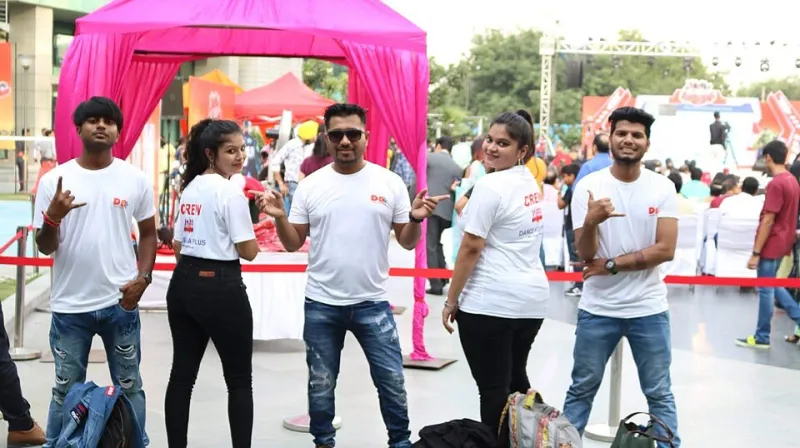
Photo: Hitesh mohan - Choreographer, CC BY-SA 4.0, via Wikimedia Commons
It is a quarter past seven on a Tuesday in Hayes, and the parquet floor of a hired community hall is already sweating. A Bluetooth speaker the size of a suitcase is pushing a bassline through the room, forty-odd people are mid-chaal, and the person at the front is counting them in over the top of the dhol. This is not a wedding, and it is not a dance rehearsal. It is a Bhangra fitness class, and the waiting list runs to three weeks.
Anyone who has watched the UK fitness timetable over the past few years will know the pattern. A trend starts in a church hall or a school gym, gets picked up by a handful of determined instructors, and within eighteen months a national chain is trialling it at 6.30am on a Wednesday. Bhangra cardio is currently somewhere between stage two and stage three of that journey, and the hall circuit is where the interesting work is happening.
The Hall Circuit Is Doing the Heavy Lifting
There is a reason so much of this scene lives in community centres rather than boutique studios. Halls in Southall, Handsworth, Wolverhampton, Leicester and Bradford are affordable by the hour, big enough for a proper circle, and — crucially — already part of the local rhythm. Aunties who would never sign up to a gym membership will happily walk five minutes to the same hall where they have attended a hundred family functions.
The economics are simple. A teacher hires a hall for a two-hour block, splits it into a back-to-back session for beginners and a faster one for regulars, and charges somewhere between six and ten pounds a head. If the room fills, it works. If it does not, the teacher is out of pocket, which is why so many of the best sessions are run by people who started by teaching friends in a living room and only scaled up once the demand was undeniable.
Gym chains have noticed. Over the course of 2026 several larger operators have added dhol-driven cardio to their timetables, usually as a weekly slot on a Saturday morning. The results have been mixed. A mirrored studio with a sound system worth more than a house is a lovely thing, but it is not the same as a hall where the caretaker knows everyone's name and the chai appears afterwards.
Who Is Teaching — and How They Blend Steps With Sets
The instructors shaping this scene tend to come from one of two directions. Some are lifelong dancers — trained in giddha, jhummar or the competitive Bhangra circuit — who got asked to run a fitness session and discovered they enjoyed it. Others are fitness professionals who fell in love with the music, spent a year learning the vocabulary properly, and built a class around it.
The best sessions, according to the people who attend them, come from the first group. Not because fitness qualifications do not matter — they absolutely do — but because someone who has grown up with boliyaan knows how the words land, when to slow the tempo, and why a particular step belongs to a particular region. That knowledge is hard to fake, and audiences can tell.
That said, several teachers now run a hybrid model: a Level 2 or Level 3 fitness qualification alongside a genuine grounding in the dance. They will happily explain the difference between a Bhangra step and a Bollywood one, and they will also explain why you should not attempt a full squat on a parquet floor in socks.
What a Session Actually Feels Like
A typical hour runs in blocks. Ten minutes of warm-up — shoulder rolls, hip openers, a gentle chaal to get the spine moving. Then three or four short routines, each building for about eight to ten minutes, with a water break in between. The music does the motivational work that a personal trainer usually has to shout for. When the dhol drops, nobody needs to be told to push.
The intensity is higher than most people expect. Bhangra movement is built around the lower body, and a full session will work calves, thighs, glutes and core in a way that a spin class only dreams about. Instructors are increasingly careful about knees and lower backs, offering modifications for anyone with joint issues, and most will suggest a trainer rather than a dance shoe on a slippery hall floor.
What surprises newcomers most is the social side. There is no mirror wall to hide behind, no headphone silence, and no real hierarchy. Aunties in their fifties are doing the same routine as students in their twenties, and the person who gets the loudest cheer is usually whoever committed hardest to the boliyaan call-and-response at the end.
The Gateway Debate: Culture or Cardio?
Here is where opinions get interesting. On one side of the argument, Bhangra fitness is a genuine doorway. People who have never listened to Punjabi music outside a wedding discover a back catalogue, learn a handful of steps, and end up at a mela or a live gig for the first time. Several teachers report that their regulars have gone on to join dance troupes or book themselves onto a gidha workshop after a year of Tuesday-night classes.
On the other side, there is a fair concern that the format flattens something rich into a workout. Strip out the lyrics, loop the drop, call it 'Bolly-Bhangra Burn', and you have a product that borrows the energy without the meaning. Some dancers are uneasy about that, and they have a point.
The most convincing answer, in our view, comes from the teachers who refuse to choose. They play full tracks, not looped edits. They explain what a boliyaan is before asking the room to shout one back. They treat the fitness as the invitation, not the whole event.
How to Find a Class That Suits You
Ask around locally before you commit — the best sessions rarely advertise widely and fill up through word of mouth. Community centre noticeboards, local South Asian Facebook groups and the teacher's own social pages are usually more reliable than a generic class finder.
When you do find one, ring ahead and ask three things: what the floor is like, whether the instructor has a fitness qualification as well as a dance background, and whether you can pay for a single trial session before signing up for a block. A good teacher will welcome all three questions.
Turn up in trainers, bring water, and leave your ego at the door. Nobody is watching your footwork. They are watching the person at the front, trying to keep up, and laughing when they get it wrong — which is, more or less, the whole point.
Where It Goes Next
The gym chains will keep testing the format, and some of those sessions will be excellent. But the centre of gravity is likely to stay in the halls, because that is where the music feels loudest and the welcome feels warmest. If you have been meaning to try one, this is the winter to do it — the waiting lists are only getting longer.