Don’t Leave It to the Playlist: The UK Bhangra MCs Keeping the Room Together
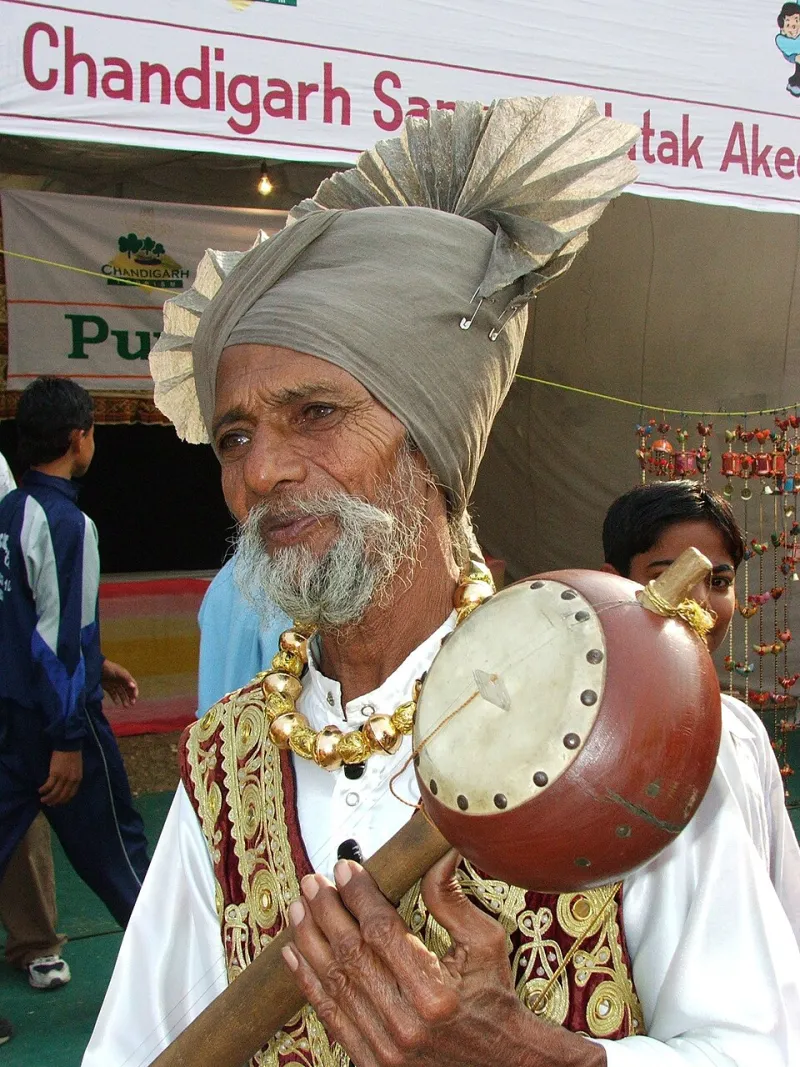
Photo: Nitin Badhwar, CC BY-SA 2.0, via Wikimedia Commons
At 9:42pm in a Southall community hall, the DJ has the next four tracks queued, the dhol player is warming up by the fire exit, and the grandmothers are still finishing their tea. The cousins are by the door, phones in hand, waiting for a signal. The person who decides when the night tips over is not the DJ, not the dhol player and definitely not the Spotify playlist. It is the MC.
That might sound obvious. It is not. In 2026, UK Bhangra events are awash with choice. Wedding playlists arrive as shared spreadsheets. Club nights are built around niche edits and viral hooks. Families request songs by voice note. Yet the more personal the playlist gets, the more someone has to turn a list of songs into a room that moves together. That is the quiet argument for the UK Bhangra MC: not as a hype man with a spare mic, but as the human mix between music, family and timing.
More than a voice at the side of the stage
The best Bhangra MCs are not just loud. They are air traffic control. They know when the dhol should come in, when the DJ should pull the bass back, and when the aunties need a song they can sing over the top of. They are part translator, part stage manager, part family diplomat. At a wedding, that might mean switching from English to Punjabi mid-sentence without losing the cousins who only speak one and the grandparents who prefer the other. At a club night, it might mean saying less than you think and letting the tune do the heavy lifting.
A good host does not fight the music. They frame it. They create the pause before the drop, the countdown before the dhol, the moment when the dancefloor realises it is all in this together. In a mixed room, that is not decoration. It is structure.
The Southall handover
Weddings are where the MC’s craft is most visible, even if it is rarely credited. The night rarely runs as one seamless party. It arrives in waves: arrivals, drinks, dinner, family photographs, the first dance, the bit where the elders leave and the cousins take over. Each wave has a different tempo. The MC has to hand the room from one mood to the next without making it feel like a schedule.
That is especially true when the dhol is involved. The dhol can lift a room in seconds, but it can also flatten it if it arrives too early or too late. Cue it while the hall is half-empty and you lose the impact. Cue it after the dancefloor has already peaked and you are chasing the night. The MC reads those signals: who is standing up, who is still eating, who has just walked in, who is about to leave. It is less about shouting and more about noticing.
There is also the family side. UK South Asian weddings are often multilingual, multi-generational and mildly chaotic. The MC is one of the few people paid to stand in the middle of that and make it feel normal. They can big up the parents without making the cousins cringe. They can invite the grandparents onto the floor without turning it into a forced moment. They can translate a request from a five-year-old and a request from an uncle in the same breath, then decide which one actually suits the room.
Club nights need a different kind of host
Outside weddings, the MC’s role changes. In a club, the crowd has already chosen to be there. They do not need a rundown of the family tree. They need someone who can read the temperature of a room that is moving fast. In Birmingham, Leeds and Glasgow, Bhangra nights now sit alongside afrobeats, garage, drill and Punjabi pop. The crowd is mixed, the references are mixed, and the attention span is shorter.
The MC’s job is not to talk over every transition. It is to know when a night needs a voice and when it needs a breather. A well-placed line before a dhol drop can turn a good room into a great one. A constant stream of chat can turn a great DJ set into a podcast with background music. The best hosts understand the difference. They treat the mic like a percussion instrument: use it for accent, not for filler.
The 2026 problem with perfect playlists
This is where the current obsession with personalisation gets interesting. Playlists are now hyper-specific. Families build them by WhatsApp. Couples arrive with mood boards. Clubbers expect edits they have heard in a 15-second clip. That is not a bad thing. It means people care about the music. But it also means the DJ is often staring at a request list that looks like five different events stacked on top of each other.
The MC is the filter. They hear the request for a 1990s classic and know whether it will land with a floor full of 2026 teenagers. They know which cousin’s song will empty the room and which uncle’s request will unexpectedly fill it. They know that a playlist can be perfect on paper and still fail in a hall with bad acoustics and a bar queue. Human hosting is not nostalgia for a pre-digital past. It is what stops personalisation from turning into fragmentation.
Cue the dhol, not the chaos
There is a practical side too. A good MC keeps an eye on the venue, the sound desk and the dancefloor. They know the difference between a crowd that is hyped and a crowd that is about to knock over a speaker. They can slow things down when the room gets too hot, speed things up when the night is flagging, and make sure the dhol player and DJ are not stepping on each other. That coordination is invisible when it works. It is very visible when it does not.
In 2026, as more weddings mix live dhol with DJ sets and more club nights mix Bhangra with everything else, that coordination matters more. The MC is the person who makes the handover feel intentional. They are the reason a night can go from a family dinner to a dancefloor without a lurch.
The Glasgow test
Glasgow is a good test case. The city’s Bhangra nights have their own energy: smaller rooms, louder crowds, a healthy disrespect for keeping genres in separate boxes. A host there cannot rely on the same script as a Southall wedding MC. They have to earn the room quickly, then get out of the way. The same is true in Bradford, Wolverhampton and East London. The accent changes. The references change. The core skill does not: read the room, protect the vibe, make the night feel shared.
That is the thing about the UK Bhangra MC. They are not the star of the show. They are the reason the show feels like one. As playlists get more personalised and dancefloors get more mixed, the human host becomes more important, not less. You can queue the songs. You cannot queue the moment when the whole room decides to move together. That still takes someone with a mic, a plan and a very good sense of timing.