Who's Behind the Boards? The Women Reshaping UK Bhangra Production — Often Without a Credit

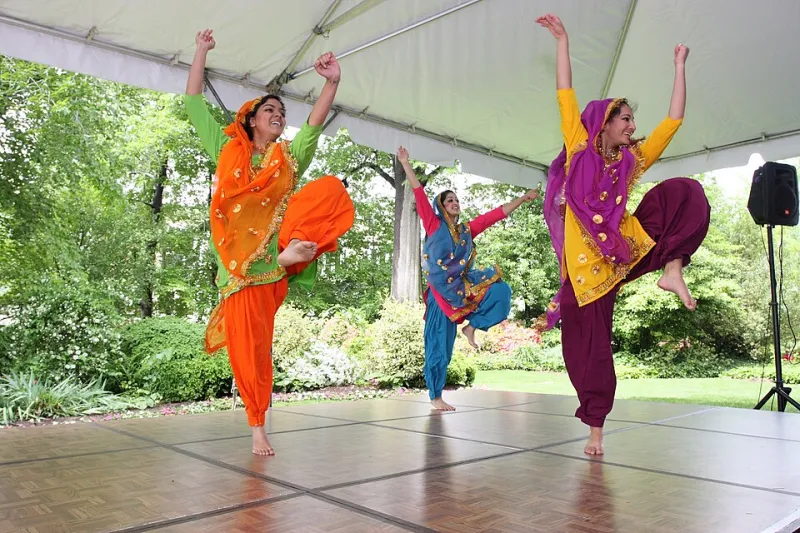
Photo: Ximena Huertas, CC BY-SA 2.0, via Wikimedia Commons
There's a game worth playing the next time a UK bhangra track lands in your queue. Open the credits. Count the names. Then count how many of them are women on the production side — producer, engineer, programmer, mix.
In most cases the answer is somewhere between zero and one. And yet the tracks don't sound like a scene with a missing half. They sound like a scene where a lot of the most interesting work is happening just off the paperwork.
This isn't a takedown of anyone's album notes. It's an observation about habits — the quiet, structural kind that don't need a villain to keep themselves going.
The Credit Roll Problem
The pattern repeats across genres, and UK bhangra hasn't escaped it. A vocalist comes into a session with a reference, a producer friend, or a voice note recorded on a phone in a bedroom in Handsworth. Someone builds the beat. Someone tracks the vocal. Someone mixes it on headphones at 1am. By the time the artwork goes out, the producer credit reads one name — and it usually isn't the person who programmed the dhol pattern, tuned the tumbi sample and did the vocal comping.
“I've been in sessions where I built the entire track and got a ‘mixed by' credit,” says Simran, a producer and engineer working out of a home setup in west London. “I didn't want to kick off. I wanted the next call. So I took it, and the next call didn't come with a better credit either.”
Multiply that by five years and you get a CV that doesn't reflect the work, which means fewer session offers, which means a thinner portfolio. Credit isn't vanity. It's infrastructure.
Meet the Names Already Doing It
None of this is a story about absence. There's a growing cluster of women producers, beatmakers and engineers in the UK scene, many of them self-taught, many of them running hybrid setups where a bedroom rig sits next to a borrowed dhol mic.
Some are building the new mid-tempo sound — the sludgy, bass-forward, slightly off-grid school of UK bhangra that's been creeping into wedding playlists. Others specialise in vocal production, which is arguably the most under-credited job in the whole chain: tuning, comping, doubling, and making a phone-recorded take sound like it was cut in a booth.
A few are now engineering for other artists rather than producing their own material, which is a different kind of visibility problem — you're essential and invisible at the same time.
The Mentorship Gap
The barrier most often named isn't talent or interest. It's access to a room.
Studio time is expensive, but it's cheaper than the informal apprenticeships that used to do this job: hanging around a producer's setup, watching, making tea, learning how a session actually runs. Those arrangements still exist, but they tend to be offered along existing lines of trust — cousin, family friend, someone from the same gurdwara, someone's younger brother.
“Nobody's being exclusionary on purpose,” says Harleen, who produces and mixes for a small independent label. “But if your mentorship network is ‘people I already know', it reproduces itself. You have to deliberately widen it, and that takes effort that nobody's paying for.”
There's also a confidence tax. Several producers described being asked, in sessions, whether they were the artist's girlfriend, or the manager, or “helping out”. One was asked twice in the same session whether she was sure about her own mix decisions.
Studio Habits That Keep Names Off the Track
A few practical things keep the imbalance in place, and they're all fixable:
The one-name producer credit. Where multiple people work on a track, the credit often defaults to whoever booked the session rather than whoever made the beat. A split sheet and a clear line in the metadata costs nothing.
The “we'll sort it later” royalty chat. Later never comes. Producers who don't have an advocate in the room are the ones most likely to end up with a flat fee and no percentage.
Session word-of-mouth. Gigs and studio work travel by recommendation. If the recommendation network is narrow, so is the pipeline.
Showcase line-ups. Producer nights, panels and beat battles still skew heavily male. It's not because women aren't submitting — it's because the bookers are calling the same five people.
What Actually Changes It
The interventions that work are unglamorous: paid studio hours set aside for women producers; split sheets as standard practice, not a sign of distrust; mentorship that actively recruits outside the existing circle; and, bluntly, more people asking “who made this?” and meaning it.
There's a commercial argument too, and it's the one the industry responds to fastest. The sound of UK bhangra is drifting — slower, heavier, more textural, more open to R&B and garage and drill inflections. The producers driving that drift are not all coming from the same rooms as the last generation. Ignoring them isn't a fairness problem. It's an A&R problem.
So next time a track stops you mid-scroll, do the credit check. If the name's missing, ask why. The scene's best-kept secret has been kept long enough.