The Main Stage Is Waiting: Why UK Festivals Need Bhangra in 2026
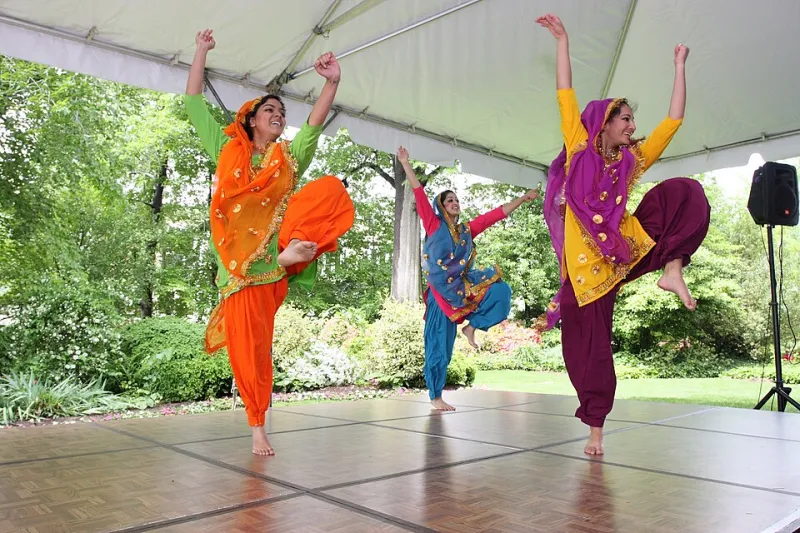
Photo: Shamrock23, CC BY-SA 3.0, via Wikimedia Commons
Every spring, UK festival lineups drop and every spring the same conversation starts. Who is headlining, who is too expensive, who is a repeat booking. This year, in 2026, the conversation should include a question that promoters keep dodging: why is Bhangra still missing from the main stages?
Not entirely missing, of course. You will find a dhol player at a community stage in Leicester, a Bhangra DJ at a food festival in Birmingham, a dance troupe opening a mela in Southall. But the mainstream UK festival circuit — the big greenfield events, the city festivals, the ones with national press coverage and six-figure capacity — still treats Bhangra as a niche add-on. The genre that fills club nights in Southall, Handsworth and Glasgow is somehow too niche for a festival bill that finds room for every subgenre of guitar music.
The 'Wedding Music' Label Is Holding Bills Back
The phrase 'Asian wedding music' does a lot of damage. It is used as shorthand, but it carries an assumption: that Bhangra is functional music for family events, not a live art form with its own stars, its own history and its own audience. That assumption is wrong, and it is costing promoters money.
UK Bhangra has produced artists with genuine cross-generational appeal. It has a back catalogue that runs from the 1980s to the present day. It has a live culture built on club nights, melas and community events that regularly sell out. And it has a streaming audience that is not confined to one demographic. The idea that a Bhangra act cannot shift tickets outside a wedding is not based on evidence. It is based on habit.
The Audience Is Already There
Look at the club circuit. Bhangra nights in London, Birmingham, Manchester and Glasgow are not novelty events. They are regular, well-attended nights with their own loyal crowds. Look at streaming. Punjabi music is one of the fastest-growing genres in the UK, and British Bhangra artists are part of that story. Look at the festivals themselves. The audiences that promoters are trying to reach — young, diverse, online, hungry for something that feels like a night out rather than a heritage display — are already listening to this music.
The commercial case is straightforward. A Bhangra stage would not just pull in British South Asian punters, although it would do that. It would pull in anyone who has been to a wedding and remembers the bit where the dancefloor actually filled up. It would give festivals a genuinely distinctive booking, not another indie band with a similar font on the poster.
What a Real Bhangra Stage Looks Like
This is not a call for tokenism. A Bhangra act stuck on a small stage at 1pm with a bad sound check is not representation; it is box-ticking. A genuine Bhangra festival stage in 2026 would be curated by people who know the scene, not by a programmer who once heard Panjabi MC at a wedding.
It would mix legacy and new talent. It would put dhol players and dancers on the same bill as DJs and vocalists. It would have proper sound, proper lighting and a set time after dark. It would include workshops during the day and a club-style finale at night. It would book artists who can actually perform live, not just press play on a backing track. And it would be marketed as a headline proposition, not a side attraction.
There is no shortage of UK-based talent to fill it. The scene has veteran acts, rising singers, producers and instrumentalists who have been playing to packed rooms for years. What it lacks is a festival infrastructure that takes them seriously.
The Promoter's Excuse
The standard promoter response is that Bhangra does not fit the festival's identity. But festival identities are not fixed. They are built by booking decisions. Ten years ago, few mainstream festivals would have programmed grime or drill in prominent slots. Now those genres are part of the furniture. The same shift is possible for Bhangra, and it does not require a dramatic leap of imagination. It requires a programmer to pick up the phone.
Another excuse is cost. Bhangra acts are not necessarily expensive compared with headline rock or pop bookings. The real cost is in getting the production right: sound checks, backline, translators if needed, and a stage team that understands the music. That is a budget issue, not a reason to avoid the genre entirely.
A third excuse is that the audience is 'not our crowd'. But festivals are already trying to broaden their crowds. They are already talking about diversity, about local audiences, about relevance. Bhangra is one of the most obvious ways to turn that talk into a programme.
The 2026 Test
This summer, there will be festivals across the UK with lineups that claim to represent modern Britain. Some of them will have a Bhangra act tucked away at midday. Most will not. The ones that do will probably find that the tent is full.
The test for 2026 is simple. If a festival can book a Bhangra club night and sell it out, it can book a Bhangra stage. If it can put a dhol player on a community stage and watch a crowd gather, it can put one on a main stage. The audience is not waiting to be convinced. It is waiting to be booked.
Bhangra is not 'Asian wedding music'. It is British music, with a British history and a British audience. The main stage is waiting. The only question is which promoter gets there first.