Sticks, Spares and Sat Nav: The Family Job That Keeps a UK Bhangra Wedding in Time
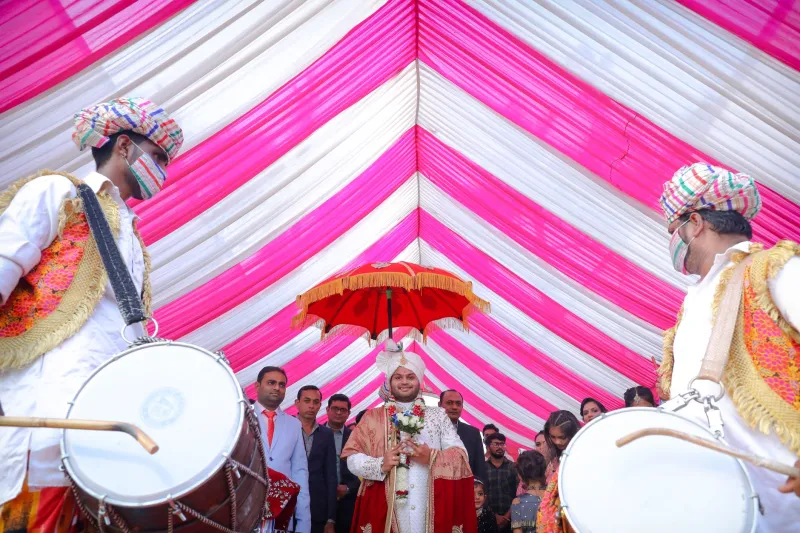
You can spot them before the dhol starts. They are the one carrying two spare tillis, a bottle of water, a roll of gaffer tape and somebody else's jacket. They are not in the main wedding photos. They are usually halfway between the car park and the marquee, asking a venue manager whether the side door can be opened for five minutes. Every UK Bhangra wedding has one: the dhol roadie.
The title is informal, but the job is real. Part logistics, part diplomacy, part percussion support, it is the family labour that keeps the loudest part of the wedding running on time. And in 2026, as dhol players become more professional and family weekends become more complicated, the role is getting harder to fill.
The job nobody puts on the invitation
The dhol player gets the cheers. The roadie gets the van keys. That is the deal, more or less.
'People think it is just carrying a drum,' says Harpreet, a dhol player from Southall who has played weddings across the Home Counties since the late 2000s. 'It is not. It is knowing which stick sounds right for the room, where the spare dhol is, when the baraat is actually leaving, and which uncle is going to ask for one more tune before dinner. The roadie is the one sorting all of that while I am playing.'
The work starts long before the first beat. A dhol is not a small instrument, and a wedding day often needs more than one. There is the main dhol, a backup, sticks, a tuning kit, maybe a small amp or a microphone for the MC. The roadie knows where it all lives. They know the route to the venue, the parking situation, the loading bay rules and the name of the person at the door who can be persuaded to bend them slightly.
It is not glamorous. It is also not optional. 'If the dhol turns up and there is no one to help set up, the whole schedule can slide,' says Baljit, a wedding coordinator in Wolverhampton. 'The dhol sets the pace for the baraat, the entrance, sometimes the whole evening. If the drum is late, everyone is late.'
More than a pair of hands
The best roadies are not just muscle. They are translators. They translate between the dhol player and the family, between the family and the venue, and between the venue and the reality of a Punjabi wedding running slightly behind schedule.
That might mean telling a cousin that no, the dhol cannot be played in the hotel lobby while the bride is signing the register. It might mean convincing a venue manager that the dhol is not a fire hazard and that the procession will be outside for exactly the length of one song. It might mean standing between the dhol player and an enthusiastic guest who wants to try the sticks after three drinks.
'It is a diplomacy job,' says Manvir, who has been the unofficial roadie for his cousin's dhol team in Leeds for the past four years. 'You have to keep everyone happy without letting anyone near the equipment. The amount of times I have had to say, bro, let him finish the set first. It is a skill.'
There is percussion support too. Roadies hold the spare dhol when the player needs a break. They know which tilli is the favourite and which one is for the guest who insists on having a go. They know that a dhol left in a hot car can go out of tune, and that a dhol left in the rain is a disaster. They know the difference between a drum that needs tightening and a drum that needs a new skin. None of this is taught in a formal way. It is passed down at weddings, in car parks and over WhatsApp voice notes.
The 2026 squeeze
So why is the role harder to fill now? Partly because the wedding circuit has changed. Dhol players are more likely to arrive with their own van, their own insurance and their own setup. That sounds like it should reduce the need for a roadie, but it often does the opposite. The more professional the operation, the less time there is for the player to stop and sort out parking, food, water or a missing cable. The roadie becomes the fixer.
At the same time, family members are harder to book. Many cousins now work weekends in retail, hospitality or the gig economy. The uncle who once had a van and a free Saturday might now be working a shift or looking after grandchildren. Younger relatives are happy to help, but they may not drive, or they may not want to miss the ceremony photos. The role is unpaid, and it can mean disappearing for an hour just as the family is gathering.
'We used to have three or four people who would just jump in,' says Harpreet. 'Now everyone is busy. Everyone has a job. Everyone has a car with a small boot. I have had weddings where I have had to ask the venue to store the spare dhol in a cupboard because there was no one to take it back to the van.'
There is also the quiet issue of respect. The roadie is often the first person to arrive and the last to leave, but they are rarely mentioned in the speeches. They miss the drinks reception. They miss the group photos. They spend the best part of the evening guarding a drum case and making sure the dhol player has a glass of water. It is a labour of love, but love does not always cover parking charges and a 6am van return.
How to be a good dhol roadie
The veterans we spoke to were clear about what makes a good roadie. First, know the schedule but do not panic about it. Weddings run on family time, not train time. Second, keep the spare sticks where you can reach them, not at the bottom of a bag. Third, learn the venue's loading rules before the day. Fourth, keep the dhol player fed and watered. Fifth, do not let anyone who has not been invited play the dhol during the ceremony. Sixth, have a phone charger.
'And never park where you cannot get out,' adds Manvir. 'That is the main one. You do not want to be the person who blocked the bride's car because you were trying to be helpful.'
The role may be informal, but it is part of the structure of a UK Bhangra wedding. It is the thing that lets the dhol player focus on the room. It is the reason the baraat starts on time, the entrance lands properly and the drum makes it home in one piece.
So if you are at a wedding this winter and you see someone carrying two tillis, a spare drum and a look of mild stress, do not ask them to dance. Ask them if they need a hand. They are the quiet heartbeat behind the loudest part of the day.