The First Dance Has Left the Building: Why UK Couples Are Opening With Dhol in 2026
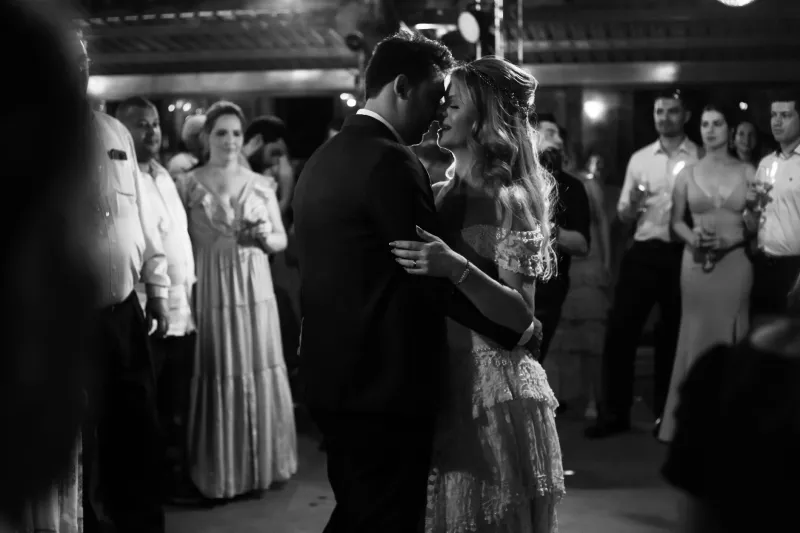
At a wedding in Leicester last month, the DJ did what DJs have done for decades. He queued the ballad, dimmed the lights and invited the couple to the floor. Nobody moved. The doors at the back of the room opened instead, a dhol player stepped through, and the bride and groom came in behind him with twelve cousins, two uncles and a routine that had been rehearsed in a leisure centre car park for six Sundays straight. The first dance had become a first production number.
That scene is no longer a one-off. Across the UK, couples are rethinking the slot that used to belong to a slow song and a sway. In 2026, the first dance is increasingly a bhangra solo, a dhol-led entrance or a full-family flash mob — and the knock-on effects run from the rehearsal studio to the DJ booth.
The Ballad Loses the Room
'We tried the slow song at the rehearsal dinner and it felt like a school assembly,' says Amrit, who married Simran in Birmingham in September. 'Everyone was watching us, nobody was dancing, and my mum was crying in a way that felt more nervous than happy. We swapped it for a bhangra routine and the room changed completely.'
The reasons are practical as much as cultural. A traditional first dance asks guests to stand and watch for three or four minutes. A bhangra opener asks them to join in, film it, clap on the beat and shout when the dhol drops. For couples who have spent the day hosting, feeding and greeting a hundred-plus people, the difference is less about tradition and more about energy.
'There is also the social media factor,' says Priya, a choreographer who works across the Midlands. 'Nobody wants to be the couple whose first dance gets no screen time. A bhangra routine gives the cousins something to post, the parents something to share and the DJ a proper moment to work with.'
Learning It in Secret, Nailing It in Public
The secret is part of the appeal. Choreographers report that the most requested package for 2026 is not a private one-to-one session but a 'family block' — two hours in a community hall, a WhatsApp group for the routine, and a strict instruction not to mention it in front of the bride or groom if either of them is meant to be surprised.
'We call it the wedding underground,' says Harjit, who runs dance workshops in Southall. 'There are group chats with code names. There are cousins practising in the garden after work. There are uncles who claim they cannot dance and then turn up to the final rehearsal with the steps nailed because they have been watching the video on loop.'
The routines themselves have changed. Where a sangeet performance might once have been five or six minutes of tightly drilled choreography, the wedding-day first dance version is shorter, punchier and built for a mixed-ability group. Choreographers talk about 'uncle-proof' steps, 'aunty-friendly' formations and a 'dhol window' — the thirty seconds where the music opens up and the room can clap along without needing to know the routine.
'You are not training dancers,' Priya says. 'You are training a family to have a good time on cue. The best routines look like they are about to fall apart and then don't.'
What It Does to the Rest of the Night
For DJs, a bhangra first dance changes the architecture of the evening. The opener now needs a proper sound check, a dhol player with a clear sightline to the couple, and a plan for what happens when the routine ends. There is no gentle fade into a slow set. The floor is already full, the energy is already high and the DJ has to keep it there.
'You used to pace the night around the first dance,' says a wedding DJ who works across the North West. 'Now the first dance is the starting gun. You cannot follow a bhangra routine with a ballad. You follow it with another bhangra track, then maybe a Punjabi folk number, then something the older guests know. It compresses the whole night.'
That compression has a downside. Couples who open with a high-energy routine sometimes find the middle of the evening sags, because the peak has come too early. Choreographers and DJs are now working together more closely, planning a second lift — often a Giddha or Boliyan moment — to carry the room through to the last hour.
The Choreographer's New Brief
The rise of the bhangra first dance has also changed what couples ask for. Less 'teach us a routine', more 'help us organise a routine'. Choreographers are being booked as much for logistics as for steps: who stands where, when the dhol enters, how to get grandparents on and off the floor without a bottleneck, and what to do if the music cuts out.
'It is part event management, part dance teaching and part family diplomacy,' Harjit says. 'You are dealing with egos, cousins who want the spotlight, and parents who want to be involved but do not want to rehearse. The actual choreography is the easy bit.'
Not Anti-Romance, Just Pro-Participation
None of this means the slow song is dead. Plenty of couples still want a private moment, and many choreographers recommend keeping a shorter slow number for the end of the night, when the room has thinned and the lights are low. The difference is that the first dance is no longer the only way to signal romance.
'I still cry at a good slow dance,' Amrit says. 'But I did not want to start my wedding standing still. I wanted to start it with my family around me and a dhol in the room. That felt more like us.'
For the UK wedding circuit, the bhangra first dance is not a trend that is about to fade. It is a format that fits the way people now celebrate: loud, filmed, shared and built for a room that wants to move. The slow song can wait. The dhol has already arrived.