Check, One, Two — Then the Dhol: How Live Bhangra Bands Are Winning Back UK Wedding Dancefloors

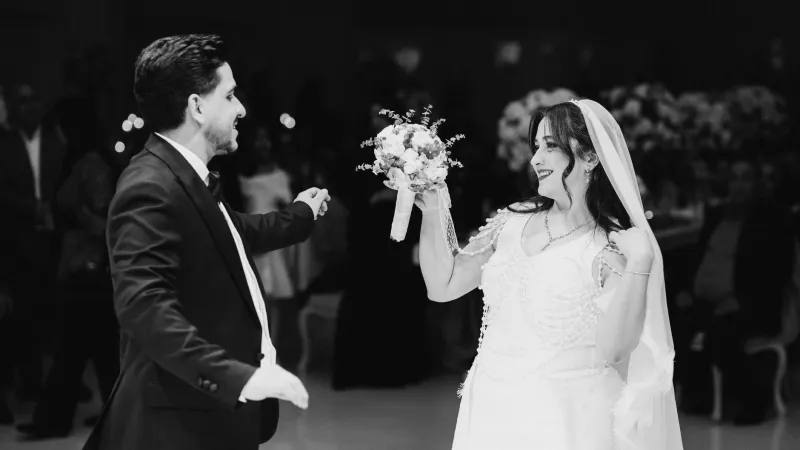
Photo: live Bhangra wedding band dhol players stage UK celebration, via www.alfaforni.com
At a banqueting suite off the A34 in Birmingham, the dancefloor is still empty and the heaters are making that low humming noise that sounds like a plane waiting to taxi. A five-piece band is halfway through a soundcheck. The dhol is muffled behind a perspex screen, the vocalist is asking for “a bit more in the monitors, please,” and a wedding coordinator is pacing the edge of the room with a clipboard. It is 4pm. The guests arrive at seven. Nobody is panicking yet.
This is the new normal for a certain tier of UK Bhangra wedding in 2026. Not a DJ booth with a laptop and a haze machine, but a stage — sometimes a modest one, sometimes just a cleared corner — with players on it. The live wedding band, once seen by some couples as a throwback to the function-room era of the Nineties and Noughties, has quietly become a booking priority again. Ask around the wedding planners in Southall, Leicester, Handsworth and Alum Rock and you will hear the same thing: more enquiries, earlier deposits, and a lot more questions about set lists.
The quote sheet has changed
“Two years ago, a couple would ask for a DJ and maybe a dhol player for the entry,” says a Birmingham-based wedding coordinator who has worked the Midlands circuit for more than a decade. “Now they ask for the band first and the DJ as the backup. It has flipped.”
That flip is not universal. It is concentrated in weddings with a sangeet night, a jaggo, or a baraat that needs a proper musical push. But it is happening often enough that bands which used to play three or four weddings a season are now looking at double that. The reasons are partly practical, partly emotional. Couples who grew up watching YouTube clips of live Bhangra sets at melas and family weddings want that same hit of volume and chaos. They also want something that cannot be replicated by a Spotify queue. A live vocalist can stretch a line, call out a cousin’s name, or drop the tempo when the older relatives finally make it to the floor. A playlist cannot.
What it costs before the first note
A five-piece — dhol, tabla, keys, vocals and guitar — typically quotes between £2,000 and £3,500 for a UK wedding in 2026, depending on travel and how many sets are involved. Add a brass section and the figure climbs towards £4,000 to £6,000. That is before the venue’s sound-limiter requirements, PAT testing, public liability insurance and the rehearsal time it takes to learn a couple’s first dance or a family favourite that is not in the band’s usual rotation.
“People think the fee is the cost,” says a bandleader from Southall who has been gigging since the late 2000s. “The fee is the easy bit. We rehearsal four times before a wedding if there is a custom song. That is four evenings when nobody is getting paid. The deposit covers the date, not the homework.”
Most bands ask for 25–50% up front. The good ones are booked 9–12 months ahead for peak season. And unlike a DJ, they cannot easily cover three weddings in a day. A live set is a physical commitment.
Rehearsal rooms and the setlist problem
The rehearsal spaces tell their own story. Industrial units in Southall, converted rooms above shops in Handsworth, a community centre in Alum Rock that smells faintly of last night’s langar. Bands rehearse midweek, usually after work, often with a borrowed drum kit and a keyboard that has seen better days. The setlist is the hardest part. Too many classics and the band sounds like a tribute act. Too many new tracks and the older aunties sit down. The best live wedding bands in 2026 run a rotation — a Panjabi MC or Alaap anchor, a Heera or Malkit Singh moment, then two or three current Punjabi hits that the younger cousins actually know.
“You have to read the room in real time,” the Southall bandleader says. “A DJ can see the floor and change the track in three seconds. We have to change the arrangement. That is the skill. That is what you are paying for.”
Where live wins
The live set owns certain moments. The dhol entry, when the groom’s side arrives and the bass drum cuts through the chatter. The sangeet, where a band can build a medley around a family’s favourite songs. The jaggo, where a vocalist can call and response with the crowd until the floor is packed. And the baraat, where brass and dhol together do something a speaker cannot — they move people physically, not just acoustically.
There is also the request factor. A live band can take a shouted request from an uncle and turn it into a 90-second interlude. A DJ can play the track, but the band can make it feel like it was planned. That is the difference between a wedding that feels organised and a wedding that feels alive.
Where the playlist still wins
For all the live-band momentum, the playlist is not going anywhere. After midnight, when the older guests have drifted to the tea and the younger cousins want a run of 20 songs in 20 minutes, a DJ is still unbeatable. A band playing three 45-minute sets cannot cover the same ground. Small venues with tight sound limits often make a full kit impractical. And for couples working to a tighter budget, a good DJ plus a dhol player for the entry remains the smarter spend.
“The playlist is not the enemy,” says a Leicester-based DJ who has shared floors with live bands all year. “The enemy is a bad playlist. A band and a DJ should be on the same team. The band gives you the moment. I give you the two hours after the moment.”
The hybrid floor
The 2026 wedding floor is increasingly a hybrid. Couples book a live band for the entry, the sangeet and the first dance, then hand over to a DJ for the rest of the night. Some bands now offer a package with a DJ attached. Others are learning to play shorter, punchier sets — 25 minutes rather than an hour — so they fit around the DJ rather than replacing them. It is less a comeback than a rebalancing. The playlist still wins the long tail. The band wins the moments people remember. And on a cold November night in Birmingham, with the heaters humming and the dhol finally in the mix, that feels like the right split.