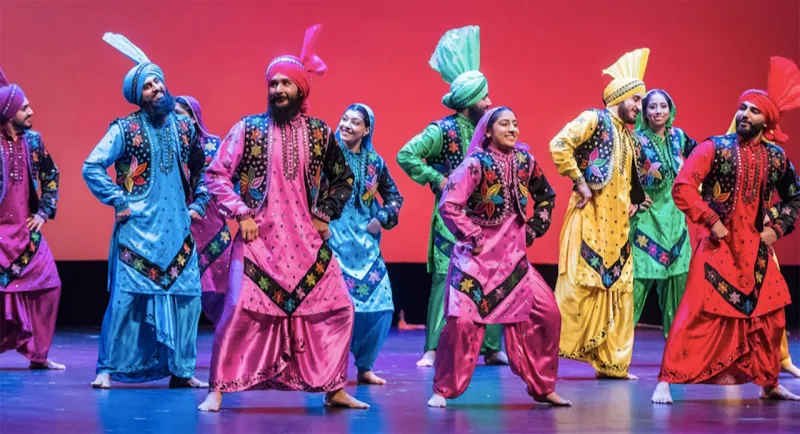
Grandma's Favourite vs. the Algorithm: Inside the UK Wedding DJ's 2026 Dancefloor Dilemma
Saturday night, 9.45pm, a marquee somewhere off the M6. The paneer is gone, the dhol player is warming up, and the DJ has a problem. An auntie wants Malkit Singh. A cousin wants the latest Punjabi drill cut. The bride wants both, ideally within the same ten minutes. Welcome to the wedding playlist war.
In 2026, the UK Bhangra wedding DJ is less a selector and more a diplomat. The job is no longer just playing the hits. It is reading a room that contains three generations, two sound systems and at least one uncle who thinks the volume knob only goes one way. At House of Bhangra, we asked working DJs how they build a set that satisfies grandma and the TikTok crowd without emptying the floor.
The dancefloor divide
The split is not simply old versus young. It is classic versus current, folk versus feed. On one side: the Safri Boys, Heera, Alaap and Daler Mehndi records that have soundtracked family weddings for decades. On the other: Karan Aujla, AP Dhillon, Sidhu Moose Wala and the growing wave of Punjabi tracks built for 15-second clips. Somewhere in the middle sits Diljit Dosanjh, still one of the few artists who can unite both camps.
DJ Harv, who works weddings across Manchester and the North West, says the requests start before the starters. 'I get a playlist from the couple, then a longer list from mum, then a voice note from an uncle,' he says. 'By the time I set up, I have about four different visions of the night. My job is to find the overlap.'
What the DJs are saying
The consensus among UK wedding DJs is that you cannot win the argument by picking a side. You win it by sequencing. DJ Simran Kaur, who plays events across London and the Home Counties, puts it plainly: 'The mistake is going too modern too early. If you drop three drill tracks at 8pm, the aunties sit down and they do not get back up. If you play only classics until 10pm, the younger guests disappear to the bar and film TikToks in the corridor.'
DJ Ravi D, a Birmingham-based DJ who works the city's banqueting halls, uses a simple rule. 'Two new tracks, one classic. Then read the floor. If the grandma table is still seated, I will bring in a dhol and go old school for five minutes. If the cousins are filming, I will give them a hook they know.' He adds that the dhol player is often the secret weapon. 'Live dhol changes the energy. It buys you time to move between eras.'
The TikTok factor
The TikTok crowd is not a monolith. Some want full choreography. Some want the latest viral Punjabi hook. Some just want to film a five-second clip for their story. DJs say the key is to give them a moment, not a whole set. 'I call it the TikTok window,' says Simran. 'Around 10.30pm, I will play two or three tracks with big, recognisable hooks. I watch the phones come out. Then I move on before the floor splinters.'
The risk is real. A track that is huge online can die in a wedding hall if the crowd does not know the dance. DJs talk about the 'phone test': if people are filming, the track is working; if they are scrolling, it is not. The best 2026 wedding sets use viral tracks as bridges, not as the whole journey.
A practical guide to blending eras
So how do you build a 2026 playlist that keeps both sides happy? The DJs we spoke to shared a loose framework.
1. Build a timeline, not a playlist. Think of the night in blocks: arrival, dinner, first dance, early dancefloor, peak, late. Each block has its own energy. Classic Bhangra works beautifully during dinner and the early dancefloor. Modern tracks own the peak. Drill and TikTok moments belong later, when the room is warm.
2. Use crossover tracks as bridges. Panjabi MC's 'Mundian To Bach Ke' is still a cheat code. It is old enough for the uncles, familiar enough for the cousins, and it has a bassline that works in 2026. Look for tracks that sample classics or mix folk instruments with modern production.
3. Edit for length. Wedding crowds do not need a full four-minute build-up. DJs use medleys and quick cuts to keep attention. A 90-second burst of a viral track can do more than the whole song.
4. Give the older generation their moment early. A short classic set before 9pm tells the aunties they are being looked after. It also leaves the younger crowd fresh for the later peak.
5. Use requests strategically. A QR request form is useful, but DJs say it should be curated. 'I do not play every request,' says Harv. 'I look for patterns. If five people ask for the same classic, it goes in. If one person asks for a track that will clear the floor, it does not.'
6. Keep a dhol player in the plan. Live dhol can lift a flagging floor and smooth the jump between eras. It also gives the DJ a natural pause to reset.
7. Have a safe closing set. End with a classic or a crossover that everyone knows. The last song is the one people remember. Do not leave it to a drill track that half the room has never heard.
The bottom line
The wedding playlist war is real, but it is not unwinnable. The DJs who do it well are not choosing between grandma and TikTok. They are building a night where both get their moment. In 2026, the best UK Bhangra wedding set is a conversation, not a contest. And if the auntie and the cousin are dancing at the same time, the DJ has done the job.